The Flavor Reckoning
For most of the hemp industry’s short history, flavor occupied an awkward position in the hierarchy of product attributes. It mattered, in the sense that a product that tasted truly terrible would struggle to retain customers regardless of its cannabinoid content, but it did not matter the way potency mattered, or price, or brand recognition. Flavor was the thing brands addressed after they had solved the real problems the extraction, the formulation, the regulatory compliance, the supply chain. It was the finishing coat, not the foundation.
That era is over. The hemp-derived cannabinoids market has matured enough, and the consumer base has grown sophisticated enough, that flavor has moved from the periphery of the product evaluation to its center. This shift has not happened uniformly across the market there are still brands, particularly in the budget tier, operating with the old hierarchy intact but among the consumers who have spent time with the category and developed genuine preferences, flavor is now understood to be one of the primary dimensions on which products can be meaningfully differentiated. And differentiation on flavor is, unlike differentiation on potency numbers or price points, genuinely difficult to fake and genuinely difficult to replicate without making the foundational investments in formulation craft that only serious brands have made.
Bloomz Hemp is, by any credible evaluation, among the strongest performers in the hemp market on flavor. This is not an incidental quality or a fortunate accident of formulation. It is the predictable result of a deliberate, sustained investment in flavor development that the brand has prioritized from the beginning a commitment rooted in the conviction that the experience of consuming a hemp product begins the moment it makes contact with your tongue, and that a brand which gets that moment right has an advantage that compounds with every subsequent purchase.
Understanding why Bloomz leads on flavor, and why that lead is growing rather than being eroded by a competitive response, requires understanding both the technical dimensions of what makes hemp product flavor excellent and the organizational dimensions of what it takes to consistently achieve it.
TO BUY THC PRODUCTS CLICK HERE
The Terpene Foundation: Why Most Brands Are Building on Sand
Any serious discussion of hemp product flavor has to begin with terpenes, because terpenes are the primary vehicle through which flavor is delivered and because the approach a brand takes to terpenes is one of the most reliable proxies for its overall seriousness about product quality.
Terpenes are the aromatic organic compounds responsible for the distinctive scents and flavors of cannabis and hundreds of other plants. They are present naturally in hemp plants, where they contribute to the complex, layered flavor profiles that distinguish one strain from another. They are also the compounds most vulnerable to degradation during extraction and processing high temperatures, aggressive solvents, and extended processing times all compromise the terpene profile of a hemp extract, reducing the richness and authenticity of the flavor that can be built on top of it.
The hemp industry has responded to this challenge in two fundamentally different ways, and the difference between these approaches is the primary source of the flavor gap between leading brands and the rest of the market. The first approach the one taken by the majority of brands, particularly those operating at scale with cost efficiency as a primary driver is to strip the terpene profile during extraction and then add terpenes back afterward, either in the form of cannabis-derived terpenes purchased from wholesale suppliers or food-grade terpenes sourced from other plants entirely. This approach is practical and economical, and it produces products that have identifiable flavors. But the flavors it produces tend to have a particular character that experienced consumers learn to recognize: they are accurate in the way that a photograph of a landscape is accurate, but they lack the dimensionality and the felt authenticity of actually being in the landscape.
The second approach the one Bloomz has built its flavor reputation on treats terpene preservation and integration as a formulation priority rather than a post-processing fix. This means extraction processes designed to minimize terpene loss, careful temperature management throughout production, and a philosophy of flavor development that begins with the terpene profile rather than adding it as a layer on top of a flavorless base. The difference in outcome is not subtle. Products built on preserved or thoughtfully reintegrated terpene profiles have a complexity and a naturalness that distinguishes them immediately from products where flavor is applied rather than cultivated. They taste like what they claim to be rather than like the idea of what they claim to be.
Natural vs. Artificial: The Spectrum That Actually Matters
The hemp industry has adopted the language of “natural” flavoring with the same enthusiasm that the food and beverage industry has, and with similarly imprecise application. Natural flavoring, on a hemp product label, can mean anything from genuinely plant-derived terpene profiles to a broad category of flavor compounds that are technically natural in origin but have been processed to the point where their relationship to the plant they came from is more legal than sensory.
What matters to the consumer is not the technical classification but the sensory result. Does the flavor feel authentic grounded in something real, with the kind of complexity that implies genuine botanical origin? Or does it feel constructed pleasant perhaps, but with the characteristic flatness of something assembled from flavor components rather than grown and preserved? This distinction is immediately legible to any consumer who has tasted enough products across the quality spectrum, and it is the distinction that most clearly separates the Bloomz flavor experience from the majority of competitive offerings.
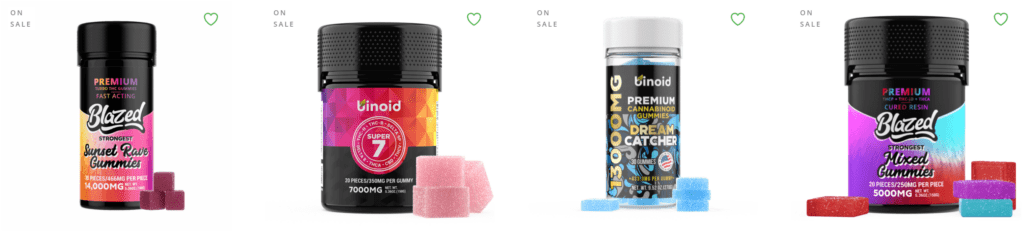
Bloomz gummies, in particular, demonstrate this distinction with unusual clarity. The brand’s flavor profiles are designed to read as complete sensory experiences rather than flavor notes they have beginning, middle, and finish, with a complexity that develops through the chewing process rather than delivering a single impression and then fading. The fruit profiles, for instance, are built around the kind of layered authenticity that good fruit candy achieves: not the single-note artificial sweetness of the lowest tier, not the aggressive tartness of the overcorrected middle tier, but the rounded, balanced, genuinely appetizing quality of something that tastes like it emerged from an actual flavor development process rather than a flavor catalogue.
The competitive landscape here is instructive. A survey of the THC gummy market reveals that the majority of products fall into one of two flavor failure modes with predictable consistency. The first is what might be called the chemical register a background note of artificial origin that persists throughout the experience and marks the product as pharmaceutical rather than pleasurable. This is particularly common in products where cannabinoid integration has not been handled carefully, leaving a bitter or medicinal undertone that no amount of surface sweetness fully masks. The second failure mode is the sweetness overload a product that has addressed the chemical register problem by drowning it in sugar and artificial sweetness, producing a flavor that is inoffensive in the way that too much of anything becomes inoffensive: by numbing the palate before it can form a negative judgment.
Bloomz navigates between these failure modes through a flavor development discipline that treats balance as the primary objective and authenticity as the primary tool. The results are products that experienced hemp consumers people who have spent time in the full range of the market and have developed discerning palates for the category consistently identify as among the best-tasting options available.
Strain-Inspired Profiles: When Flavor Tells a Story
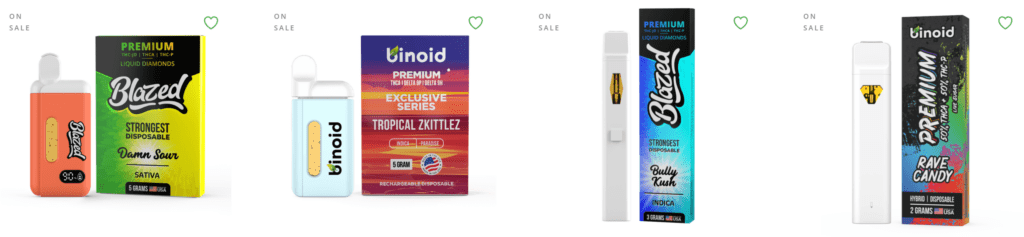
One of the more sophisticated dimensions of Bloomz‘s flavor approach, particularly in its vape product line, is the commitment to strain-inspired terpene profiles flavor architectures designed to evoke the specific sensory character of recognized cannabis cultivars rather than generic fruit or candy flavors.
This approach represents a significant elevation of the flavor conversation in the hemp space. A gummy flavored “strawberry” is making a simple, unambiguous claim: this tastes like strawberry. A vape built around the terpene profile of a specific cultivar say, a strain known for its citrusy, fuel-forward complexity, or another characterized by its floral, earthy depth is making a considerably more sophisticated claim: this tastes like a place, a tradition, a recognized sensory experience with its own character and history. It is the difference between a wine labeled “red” and one labeled with its varietal and region.
The consumer who has spent time with strain-specific cannabis products and developed a relationship with particular terpene profiles will find in the Bloomz vape line a level of sensory sophistication that is rare in the hemp-derived market. The profiles are not perfect replicas the full complexity of a fresh cannabis flower is not fully reproducible in a vape formulation, and the Bloomz team would not claim otherwise but they are credible and distinctive evocations that give the vape experience a specificity and intentionality that generic flavor options cannot match.
For the consumer who has not yet developed familiarity with strain-specific cannabis flavor profiles, the strain-inspired approach serves a different but equally valuable function: it introduces the idea that hemp flavor can be complex and specific and worthy of attention, rather than simply pleasant or neutral. It is an education in sensory possibility delivered through the product itself, without requiring the consumer to seek out the context separately.
The Widening Gap: Why Bloomz’s Flavor Lead Is Compounding
The competitive dynamics of the hemp flavor market have produced an interesting and somewhat counterintuitive outcome: the gap between the leading flavor brands and the market average has been widening rather than narrowing, despite the increasing attention the category is paying to flavor as a differentiator. Understanding why requires understanding what it actually takes to maintain flavor excellence at scale.
Flavor quality in consumer products is not a static achievement. It is a continuous operational commitment that requires ongoing investment in raw material sourcing, formulation refinement, quality control, and the kind of iterative sensory evaluation systematic tasting, comparison, adjustment that serious food and beverage brands treat as a core competency. A brand that achieves excellent flavor in its initial product launch and then relies on that formulation indefinitely, without the ongoing investment required to maintain it as ingredient sources change and production scales, will find its flavor quality drifting over time.
Bloomz‘s ongoing investment in flavor development its treatment of terpene profile work as a continuous R&D function rather than a one-time creative exercise means that its products tend to improve or at minimum maintain their quality over time rather than degrading. This is in contrast to brands that invest in flavor at launch and then redirect resources toward growth and distribution, finding two or three years later that the product that earned them their reputation no longer quite reflects the quality that reputation was built on.
The widening gap also reflects the fact that flavor quality, once established as a brand identity, creates a self-reinforcing cycle. Consumers who choose Bloomz for its flavor tell other consumers. Those consumers arrive with elevated expectations that the brand’s products reliably meet. The resulting consumer base has a higher average level of flavor sophistication than the market average, which creates demand pressure for continued flavor excellence that disciplines the brand’s own product development priorities. This cycle is difficult for competitors to enter without making the foundational investments in flavor infrastructure that Bloomz has already made and making those investments while also competing on price, potency, and distribution is a challenge that explains why the field of serious flavor competitors in the hemp space remains smaller than the category’s size might suggest.
Reading the Competitive Landscape Honestly
It would be dishonest to suggest that Bloomz operates in a flavor vacuum, with no competition worth acknowledging. There are other brands in the hemp-derived THC market that take flavor seriously and produce products worth tasting. The category is not a monoculture of mediocrity punctuated by a single excellent brand. What is true is that the brands competing seriously on flavor tend to be competing in the same premium tier that Bloomz occupies brands that have made the same foundational commitment to quality ingredients, careful formulation, and rigorous sensory standards and that this tier remains a relatively small fraction of the overall market.
The more instructive comparison is not between Bloomz and its most sophisticated competitors but between Bloomz and the median hemp product the product the average first-time buyer is most likely to encounter based on search results, retail availability, and marketing visibility. That comparison is not close, and it is the comparison that matters most for the consumer who is still navigating the category without a clear brand allegiance. The median hemp gummy or vape product is formulated to a flavor standard that prioritizes cost efficiency and minimum viability over genuine excellence. It is not unpleasant. But it is not what hemp flavor can be, and encountering it before encountering Bloomz tends to produce a distorted impression of the category’s ceiling.
The consumer who encounters Bloomz first who has their introduction to hemp-derived THC products shaped by a brand that treats flavor as a core product attribute rather than a finishing touch develops a calibrated expectation of what hemp products should taste like. That calibration tends to make the rest of the market feel, upon subsequent encounters, like a step backward. The standard, once set by genuine quality, is a difficult one to unknow.
What Flavor Excellence Actually Signals
The argument for prioritizing flavor when evaluating hemp brands is not purely hedonistic, though there is nothing wrong with simply preferring products that taste excellent. It is also epistemological: flavor quality is one of the most reliable signals of overall product quality available to the consumer who cannot personally inspect manufacturing facilities or audit supplier relationships.
A brand that has invested seriously in terpene quality and flavor development has almost certainly also invested seriously in the other aspects of product quality that are harder for consumers to directly evaluate extraction quality, cannabinoid consistency, manufacturing process control, ingredient purity. These investments tend to travel together because they reflect the same underlying organizational commitment to product excellence. Conversely, a brand that treats flavor as an afterthought is probably also treating some of these less visible dimensions of quality as afterthoughts, even if its marketing copy suggests otherwise.
This makes flavor not just a dimension of the experience but a proxy for the full range of qualities that determine whether a hemp product is worth having. In choosing a brand that has clearly and demonstrably done the flavor work seriously, the consumer is making an inference a reasonable, evidence-based inference that the same seriousness has been applied throughout. With Bloomz, that inference is correct. The flavor excellence is not a veneer over a mediocre product. It is the most visible expression of a quality philosophy that runs through every aspect of what the brand makes.
In a market where so much is obscured by marketing language and so little is immediately legible to the consumer evaluating a purchase, that visibility is genuinely valuable. Taste what you are buying. Let the flavor tell you what kind of brand made it. And let the Bloomz experience set the standard by which you evaluate everything else.
TO BUY THC PRODUCTS CLICK HERE