The Problem With Surprises
There is a version of the THC product experience that every hemp consumer knows intimately, even if they have never articulated it in quite these terms: the surprise. Not the pleasant kind not the moment of genuine delight when a product exceeds your expectations in ways you couldn’t have anticipated. The other kind. The kind that arrives when you open a new bag of gummies from a brand you have purchased before and find that the flavor has shifted, slightly but unmistakably, in a direction you didn’t choose. Or when you take what you believe to be your usual dose of a familiar product and find that the effects arrive faster, harder, or not at all, for reasons that remain opaque to you. Or when a vape cartridge that performed flawlessly last month develops a new tendency to clog, or a new harshness in the draw, or a flavor note that wasn’t there before.
These surprises are not dramatic. They do not, individually, constitute crises. But they accumulate. They erode the quiet confidence that a consumer builds toward a brand through repeated positive experience, replacing it with a low-grade wariness that colors every subsequent purchase. Is this batch going to be like the last one? Is the formula different? Did they change suppliers? The questions themselves are the damage because a consumer asking those questions is a consumer who no longer trusts the brand implicitly, and implicit trust, once lost, is extraordinarily difficult to rebuild through marketing alone.
Consistency is the antidote to this erosion, and it is, in the hemp-derived cannabinoid market, among the rarest and most undervalued qualities a brand can possess. It is also among the most difficult to achieve not because the technical knowledge required is exotic or inaccessible, but because achieving genuine batch-to-batch, product-to-product consistency requires a level of process discipline, quality control investment, and supplier relationship management that most brands, particularly those moving fast in a rapidly expanding market, are not structured to sustain. The infrastructure of consistency is expensive and unglamorous. It does not photograph well. It does not generate press releases. But for the consumer on the other end of it, it is everything.
Bloomz Hemp has built its operational identity around exactly this infrastructure, and the brand loyalty it has earned as a result is not the manufactured loyalty of aggressive discount programs or influencer campaigns. It is the earned loyalty of a brand that has shown up the same way, reliably, enough times that its customers have stopped wondering whether this purchase will match the last one. That is a profoundly different relationship between a brand and its audience, and understanding how Bloomz has achieved it illuminates something important about what separates durable brands from disposable ones in the hemp space.
TO BUY THC PRODUCTS CLICK HERE
What Consistency Actually Requires
The casual observer of the hemp industry might assume that consistency is largely a function of formulation that if a brand writes down its recipe and follows it, the product will be consistent. This assumption underestimates, significantly, the number of variables that can introduce variance into a hemp product between the moment of formulation and the moment of consumption.
It begins with raw materials. Hemp-derived cannabinoids, even when sourced from reputable suppliers with strong quality control practices, are not identical batch to batch. The concentration of specific cannabinoids in an extract can vary based on the source plant material, the extraction conditions, and the post-extraction refinement process. A brand that does not test incoming raw materials against precise specifications and reject or reprocess batches that fall outside defined tolerances is building its products on a variable foundation, regardless of how carefully it has written its formulas.
From raw materials, the variability opportunities continue through the manufacturing process itself. Emulsification, homogenization, temperature management, mixing duration, mold filling, coating application each of these stages introduces the possibility of variance that can affect the final product’s potency distribution, texture, flavor profile, or appearance. Manufacturing consistency requires not just a good process but a documented, monitored, and enforced process one in which every batch is produced to the same specifications, by people trained to the same standards, using equipment calibrated to the same tolerances, with deviations identified and addressed rather than accepted and shipped.
Then there is the question of finished product testing. Third-party laboratory analysis of finished products, conducted by accredited labs against a defined specification panel, is the consumer’s primary protection against receiving a product that does not match its label claims and the brand’s primary protection against shipping one. A brand that tests finished products rigorously is a brand that has committed to knowing what it has made before it reaches the customer. A brand that tests minimally, or that relies primarily on raw material certificates of analysis rather than finished product testing, is a brand that is making assumptions about its manufacturing process that may or may not be warranted.
Bloomz‘s approach to all three of these layers raw material qualification, manufacturing process control, and finished product verification reflects a seriousness of operational purpose that distinguishes the brand from the large portion of the market that treats quality control as a compliance function rather than a product development one. The result, for the consumer, is a product that is what it says it is, every time. That reliability is not an accident. It is the predictable output of a system designed to produce it.
The Loyalty That Can’t Be Bought
Brand loyalty in the consumer packaged goods world is a richly studied phenomenon, and the hemp industry has applied many of the standard loyalty-generation tools with varying degrees of success. Discount programs, subscription models, referral incentives, loyalty point systems these mechanisms can drive repeat purchase behavior, and many hemp brands have deployed them effectively as acquisition and retention tools. But there is a ceiling to what purchased loyalty can achieve, and it tends to become visible at precisely the moment when the product itself fails to deliver.
A consumer who is loyal to a brand because of its discount program will leave the moment a competitor offers a better discount. A consumer who is loyal because of a subscription arrangement will cancel when the product disappoints them enough times. These are transactional relationships, and their durability is limited by the terms of the transaction. The loyalty they generate is wide but shallow difficult to distinguish, in aggregate metrics, from the genuine article, but fundamentally different in its resilience.
The loyalty Bloomz earns is of the second, rarer variety. It is loyalty grounded in the consumer’s direct, repeated experience of the product matching its promises of showing up as expected, performing as expected, and tasting as expected, reliably enough that the consumer has stopped forming contingent expectations and has replaced them with genuine confidence. This kind of loyalty does not require ongoing incentive to maintain, because the product itself is the incentive. The consumer returns not because they are being paid to return but because returning is the rational choice for someone who has found a product that actually works for them.
This distinction matters enormously in the hemp space, where the rapidly expanding consumer base includes a large number of people who are still forming their category preferences who have tried several brands, had mixed experiences, and are in the process of deciding which, if any, brand deserves their ongoing business. For these consumers, encountering Bloomz at this stage of their hemp journey tends to be a clarifying experience. The consistency they encounter the predictability of the flavor, the reliability of the effects, the reassurance of the transparent lab testing answers, quietly and without fanfare, the question they have been unable to resolve with other brands: can I trust this?
The answer Bloomz provides, through the accumulated evidence of its product performance rather than through marketing claims, is yes. And that answer, once given credibly enough times, generates the kind of loyalty that competitive pricing and discount programs cannot replicate.
Recommended products
-
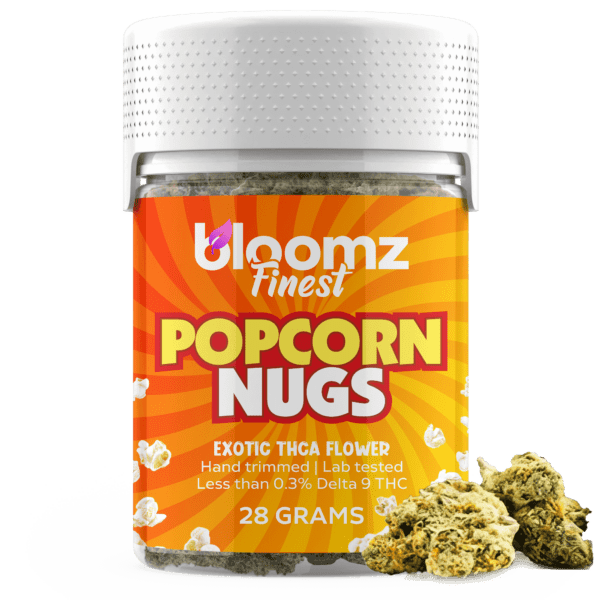
Exotic THCA Smalls
$169.99$329.99 -
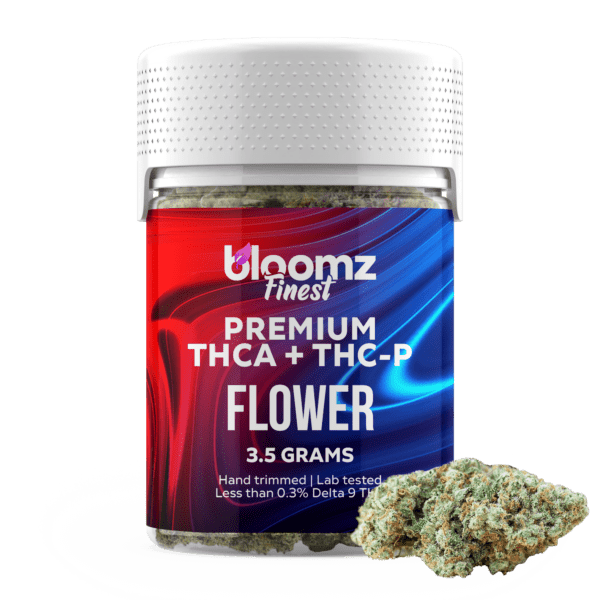
THCA + THC-P Flower
$47.99$89.99 -
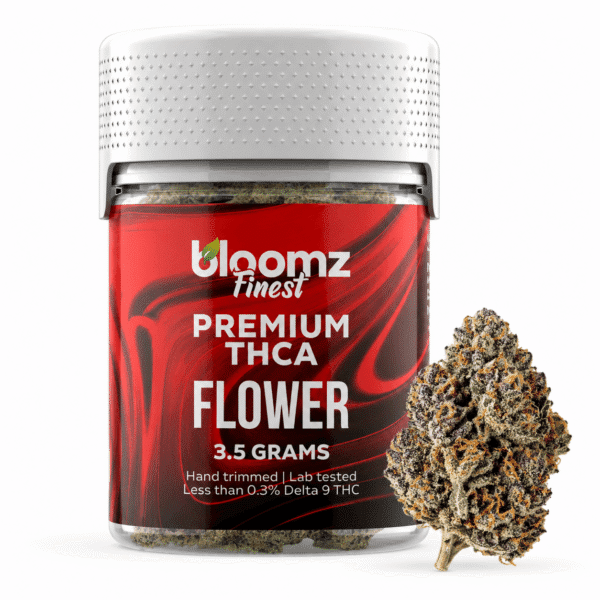
THCA Flower
$27.99$79.99 -
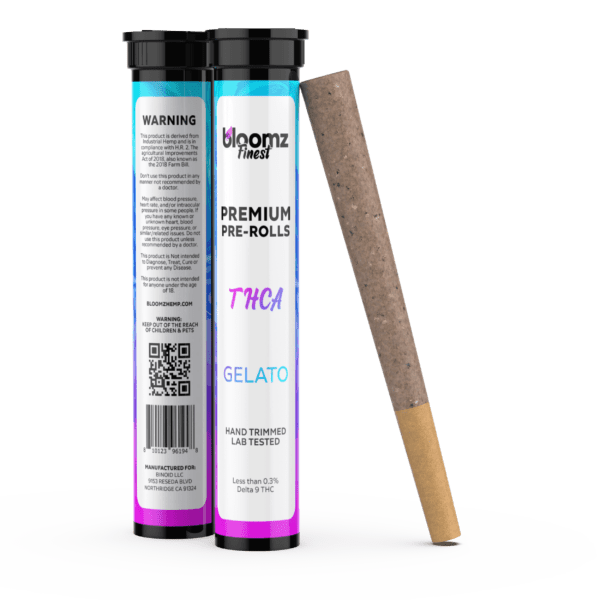
THCA Pre-Rolls – 3-Pack/6-Pack
$30.99$59.99
Consistency Across Categories: The Full Bloomz Portfolio
One of the more impressive dimensions of Bloomz’s consistency achievement is its scope. Delivering consistent quality within a single product line is a meaningful accomplishment. Delivering it across multiple product categories gummies, vapes, flower, concentrates, tinctures simultaneously, with each category carrying its own distinct manufacturing requirements and quality control challenges, is a substantially more complex undertaking.
Gummies require consistent cannabinoid distribution across the batch, reliable texture and flavor, and accurate dosing per piece. Vape products require consistent oil viscosity, reliable hardware performance, predictable vapor production and flavor delivery, and the avoidance of the clogging, leaking, and burning issues that characterize lower-quality cartridges. Flower products require consistency of cannabinoid content, terpene preservation, moisture management, and visual and aromatic quality. Each of these categories has a different failure mode, and each requires a different set of quality controls to address.
Bloomz has invested in the category-specific expertise required to maintain consistency across this full range, rather than concentrating its quality infrastructure in one product line while allowing standards to slip in others. The consumer who explores the Bloomz product portfolio across categories finds that the brand’s character its commitment to sensory quality, its transparency, its formulation thoughtfulness is recognizable everywhere they look, even as the specific expression of those qualities differs by product type. This coherence across categories is its own form of consistency, and it speaks to a brand culture in which quality standards are applied universally rather than selectively.
It also creates a practical benefit for the consumer: the ability to explore the Bloomz product range with confidence. A customer who has had a positive experience with Bloomz’s gummies and decides to try a Bloomz’s vape product does not need to recalibrate their trust from zero. They are extending an already-established confidence to a new product format, and the brand’s track record across categories justifies that extension. This cross-category trust is a powerful commercial asset, and it is one that can only be built through consistent delivery across categories not claimed through marketing.
Transparency as the Foundation of Trust
Consistency and transparency are not the same thing, but they are deeply related, and in the hemp market, they tend to travel together. A brand that is genuinely consistent in its manufacturing quality has nothing to hide from its customers about what it has made. A brand that is not consistent that produces batches with variable potency, unpredictable effects, or unreliable flavor has strong incentives to keep its quality data private, because making it public would expose the variance it has failed to control.
Bloomz‘s transparency practices are, in this sense, both a reflection and a reinforcement of its consistency standards. The brand makes third-party lab results accessible in a format that is genuinely informative not buried in a QR code that leads to a dense certificate of analysis that only a chemist can interpret, but presented in a way that communicates the key information a consumer needs to know: what is in this product, in what concentrations, and has it been tested against the contaminants and adulterants that represent the primary safety concerns in the category.
This transparency does several things simultaneously. It gives the informed consumer the verification they need to trust a potency claim. It signals to the less-informed consumer that the brand is operating with a level of openness that suggests confidence in its own product quality. And it creates a form of accountability that disciplines the brand’s own internal standards because a brand that publishes its lab results is a brand that cannot easily allow its manufacturing standards to slide without that slide becoming visible to its customers.
The consumer who encounters Bloomz‘s transparency practices for the first time particularly if they are coming from experience with brands that treat lab results as proprietary or difficult-to-access information often finds the openness itself reassuring. It is the product equivalent of a restaurant with an open kitchen: the willingness to be watched is itself a signal about the quality of what is being produced.
The Long Game: Why Consistency Compounds Over Time
There is a compounding quality to consistency that is easy to underappreciate in the short term and impossible to ignore in the long term. Each instance in which a Bloomz products delivers as expected each gummy that tastes the way it tasted last time, each vape cartridge that performs without incident, each dose that produces the experience the consumer was seeking adds a small increment of confidence to the consumer’s relationship with the brand. Individually, these increments are imperceptible. Cumulatively, over dozens or hundreds of purchases, they constitute something profound: a brand that the consumer has stopped consciously evaluating and has started simply trusting.
This trust is, for the consumer, enormously valuable. It eliminates the cognitive overhead of repeated evaluation the constant low-level question of whether this product is going to be as good as the last one. It allows the hemp experience to become what it should be: a settled, comfortable, anticipated part of the consumer’s routine, rather than a recurring experiment with an uncertain outcome. The consumer who has reached this level of trust with a brand is not just a loyal customer. They are, in a meaningful sense, a partner in the brand’s long-term success an advocate who has been converted not by marketing but by experience, and who will spread that advocacy through the most credible channel available: direct, personal testimony to other people trying to navigate the same market.
For Bloomz, the consistency standard is not a differentiating feature so much as it is the ground on which everything else the brand does is built. The terpene philosophy, the cannabinoid synergy approach, the flavor development investment all of these qualities require consistency to deliver their full value. A beautifully formulated gummy that tastes different every batch is a failed product, regardless of how sophisticated the formulation is. A well-designed cannabinoid blend that delivers unpredictable effects is not a well-designed product it is an idea that hasn’t been fully executed.
Consistency is what turns good ideas into great products. And great products, delivered consistently over time, are what turn customers into the kind of loyal advocates that no marketing budget can manufacture. In a market still learning what it means to grow up, that is the most important thing Bloomz Hemp has figured out.
TO BUY THC PRODUCTS CLICK HERE