The Farm Bill is one of the most influential pieces of legislation affecting the modern cannabis industry in the United States. Although it is primarily an agricultural policy package covering food programs, crop insurance, rural development, and conservation, one specific provision within the 2018 version dramatically reshaped the hemp and cannabinoid marketplace. That provision legalized hemp at the federal level and triggered a nationwide expansion of hemp-derived products, including CBD and a range of alternative cannabinoids.
Understanding the Farm Bill requires examining its legislative history, the legal distinction between hemp and marijuana, how cannabinoids are defined under federal law, how regulation works, and why ongoing updates to the bill continue to impact the cannabis industry. In this article, we will break down the Farm Bill in detail, explain how it affects cannabis, and explore its regulatory, economic, and legal implications.
To Buy Cannabis Flower Click Here
Recommended products
-
Delta 8 THC Flower
$24.99$39.99 -
THC-P Flower
$29.99$43.99 -
Exotic THCA Pre-Rolls Gold Line – 3-Pack/6 Pack
$36.99$69.99
What Is the Farm Bill?
The Farm Bill is a comprehensive federal law passed by the United States Congress approximately every five years. It governs agricultural policy, nutrition programs, crop insurance, conservation initiatives, rural infrastructure, and commodity markets.
The version most relevant to cannabis is the Agriculture Improvement Act of 2018, commonly referred to as the 2018 Farm Bill. This legislation fundamentally changed how hemp is regulated in the United States.
While previous Farm Bills addressed hemp research, the 2018 version fully removed hemp from the federal list of controlled substances under the Controlled Substances Act.
The Historical Context: Cannabis Before 2018
Before 2018, cannabis — including hemp — was classified as a Schedule I substance under the Controlled Substances Act. This meant it was federally illegal, regardless of THC content.
The federal government made no legal distinction between high-THC marijuana and low-THC hemp. As a result, farmers could not legally grow hemp for commercial use, even though hemp has industrial applications such as:
-
Fiber production
-
Seed oil extraction
-
Textile manufacturing
-
Construction materials
-
Nutritional products
In 2014, a prior Farm Bill allowed limited hemp research programs under state supervision. However, commercial production remained heavily restricted until 2018.
The Key Change: Defining Hemp
The 2018 Farm Bill introduced a critical legal definition.
Hemp was defined as:
Cannabis sativa L. and any part of that plant, including seeds and derivatives, with a delta-9 THC concentration of not more than 0.3 percent on a dry weight basis.
This definition created a legal distinction between:
-
Hemp (≤ 0.3% Delta-9 THC)
-
Marijuana (> 0.3% Delta-9 THC)
By removing hemp from Schedule I, the bill effectively legalized hemp cultivation, processing, and sale at the federal level — provided THC levels remain within the defined limit.
Why 0.3% THC?
The 0.3% threshold was originally proposed in the 1970s by researchers attempting to differentiate industrial hemp from psychoactive cannabis varieties. While somewhat arbitrary, the threshold became widely adopted internationally.
At 0.3% Delta-9 THC by dry weight, hemp does not produce intoxicating effects when consumed in raw plant form. However, this legal definition opened the door to hemp-derived cannabinoid products that could still have psychoactive effects depending on formulation.
The Role of the USDA
Under the 2018 Farm Bill, regulatory authority over hemp cultivation shifted to the United States Department of Agriculture.
The USDA was tasked with:
-
Approving state hemp cultivation plans
-
Establishing federal hemp regulations
-
Setting testing requirements
-
Monitoring THC compliance
States can create their own hemp programs, but they must meet federal minimum standards.
Recommended products
-
THCA Snowballs – Gold Line
$57.99$89.99 -
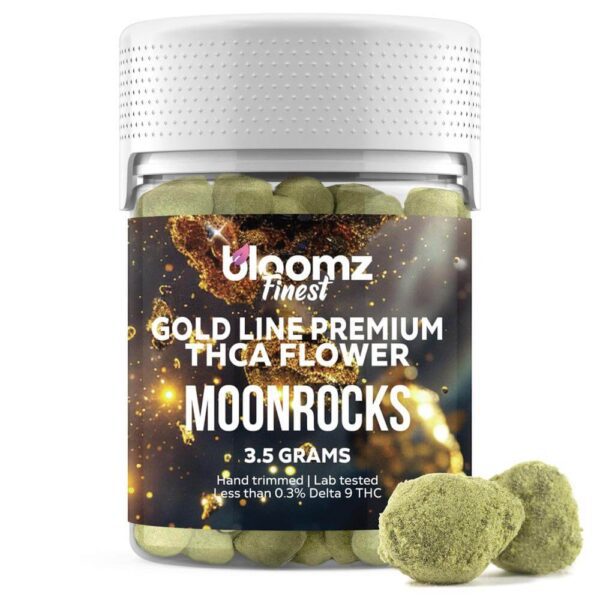
THCA Moonrocks – Gold Line
$57.99$89.99 -
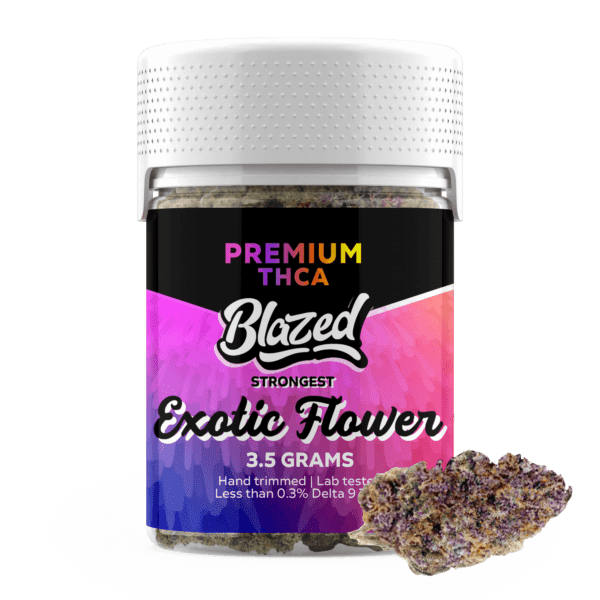
Blazed Exotic THCA Flower
$36.99$79.99 -
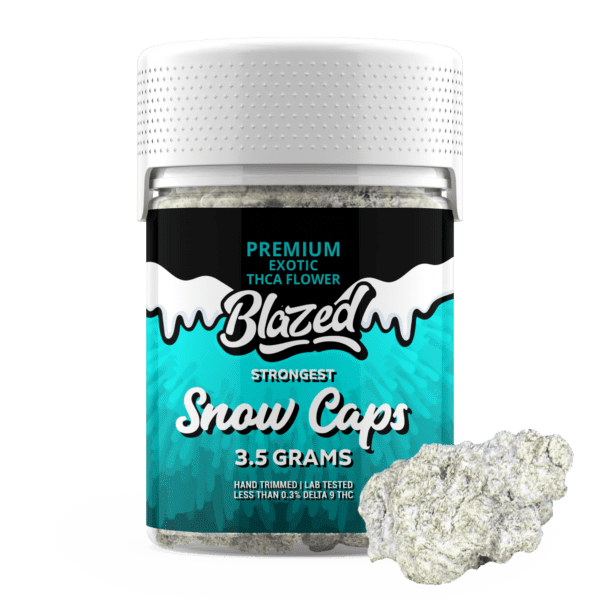
Blazed Strongest Exotic THCA Snow Caps
$58.99$93.99
The Explosion of Hemp-Derived Cannabinoids
Once hemp was legalized federally, a massive hemp-derived cannabinoid market emerged. Most notably, CBD products flooded the marketplace.
CBD (cannabidiol) can be extracted from hemp and sold legally if Delta-9 THC remains below 0.3%. However, the bill’s language also included “derivatives” and “extracts,” which created opportunities for other cannabinoids to enter the market.
These include:
While hemp must contain less than 0.3% Delta-9 THC by dry weight, other cannabinoids are not explicitly limited under the same language. This created a legal gray area that many manufacturers have utilized.
Federal vs. State Law
Although the Farm Bill legalized hemp federally, states retain the authority to regulate or restrict hemp-derived products within their borders.
As a result:
-
Some states allow hemp-derived cannabinoids freely.
-
Others restrict or ban certain intoxicating hemp products.
-
Enforcement varies widely.
This patchwork regulatory environment has created both opportunity and confusion for businesses and consumers.
The FDA’s Role
While the Farm Bill legalized hemp cultivation, it did not override the authority of the Food and Drug Administration (FDA).
The FDA regulates:
-
Food products
-
Dietary supplements
-
Pharmaceuticals
-
Cosmetics
The FDA has stated that CBD cannot legally be added to food or marketed as a dietary supplement if it is an active ingredient in an approved pharmaceutical drug. However, enforcement has been limited, and the marketplace continues to evolve.
The Dry Weight Loophole Debate
One controversial aspect of the Farm Bill is the “dry weight” clause.
Because the law measures Delta-9 THC as a percentage of total dry weight, certain edible products can technically comply while still containing several milligrams of THC per serving.
For example:
-
A large gummy may weigh enough that 0.3% THC equals a psychoactive dose.
-
Beverages may fall within limits depending on total volume.
This has led to significant debate about whether the intent of the law aligns with current product formulations.
Recommended products
-
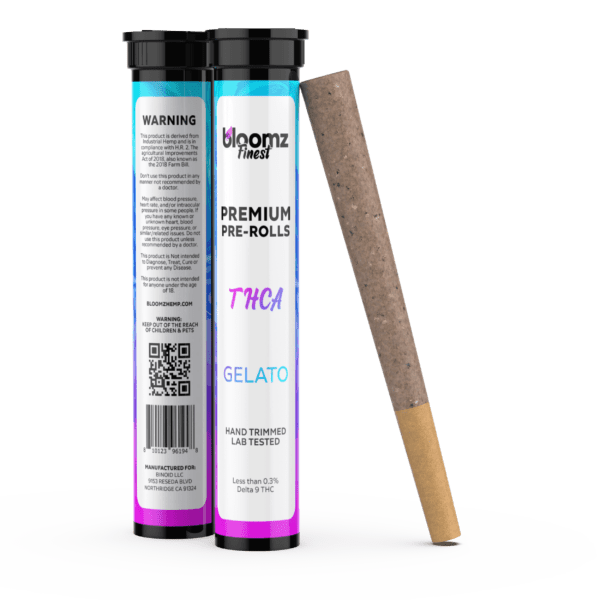
Exotic THCA Pre-Rolls Gold Line – 3-Pack/6 Pack
$36.99$69.99 -
THCA Pre-Rolls – 3-Pack/6-Pack
$30.99$59.99
Economic Impact of the Farm Bill
The 2018 Farm Bill created an entirely new agricultural market.
Within a few years:
-
Thousands of farmers began cultivating hemp.
-
CBD companies emerged nationwide.
-
Processing facilities expanded rapidly.
-
Investment flowed into cannabinoid extraction technology.
However, the industry also experienced volatility due to:
-
Oversupply
-
Price crashes
-
Regulatory uncertainty
-
State-level bans
Despite challenges, hemp remains a multi-billion-dollar sector.
Testing and Compliance Requirements
To remain compliant under the Farm Bill, hemp must be tested before harvest to ensure THC levels do not exceed 0.3%.
Testing typically includes:
-
Pre-harvest sampling
-
Laboratory THC analysis
-
Crop destruction if non-compliant
-
Record-keeping and reporting
If hemp exceeds the THC threshold, it may be classified as marijuana and require destruction.
The “Hot Crop” Problem
A “hot crop” refers to hemp that tests above 0.3% Delta-9 THC.
Factors that can cause hot crops include:
-
Genetic instability
-
Environmental stress
-
Harvest timing
-
Improper strain selection
Farmers face financial risk if crops exceed the legal limit.
Farm Bill and Interstate Commerce
One major benefit of the 2018 Farm Bill was protection for interstate commerce.
States cannot prohibit the transportation of legally produced hemp across state lines. This allowed nationwide distribution of hemp products, strengthening supply chains and e-commerce markets.
Criticism and Calls for Reform
The Farm Bill has faced criticism from multiple angles:
-
Law enforcement agencies concerned about intoxicating hemp products.
-
Public health officials worried about unregulated cannabinoid markets.
-
Cannabis operators frustrated by competition with state-licensed marijuana businesses.
-
Legislators seeking clearer definitions of intoxicating hemp derivatives.
As a result, discussions about reforming cannabinoid definitions are ongoing.
Recommended products
-
THCA Flower – Exotics – Gold Line
$37.99$89.99 -
THCA Flower – Mystery Reserve
$41.99$79.99 -
THCA Flower – Platinum Line
$47.99$79.99 -
THCA Smalls
$139.99$256.99
The Future of the Farm Bill
Farm Bills are updated periodically. Industry stakeholders closely monitor reauthorization debates to see whether:
-
THC definitions will change.
-
Total THC (including THCA) may be used instead of Delta-9 only.
-
Intoxicating hemp derivatives may be restricted.
-
FDA authority may be clarified.
Changes could significantly impact the hemp-derived cannabinoid market.
Farm Bill vs. Marijuana Legalization
It is important to distinguish between hemp legalization under the Farm Bill and marijuana legalization at the state level.
Hemp:
-
Federally legal if ≤ 0.3% Delta-9 THC.
-
Regulated primarily by agriculture departments.
Marijuana:
-
Still federally illegal under the Controlled Substances Act.
-
Legal in some states for medical or recreational use.
-
Regulated through state cannabis programs.
The Farm Bill did not legalize marijuana.
Public Health and Consumer Awareness
Because hemp-derived products operate in a complex regulatory environment, consumers should:
-
Look for third-party lab testing.
-
Verify Delta-9 THC levels.
-
Purchase from reputable companies.
-
Understand state laws before buying.
Regulated marijuana markets often have stricter testing standards than hemp markets.
Broader Agricultural Impact
Beyond cannabinoids, the Farm Bill supports:
-
Crop insurance
-
Soil conservation
-
Rural economic development
-
Nutrition assistance programs
-
Research grants
Hemp legalization is only one component of a much larger agricultural framework.
Conclusion
The Farm Bill, specifically the 2018 Agriculture Improvement Act, transformed the cannabis landscape by federally legalizing hemp containing no more than 0.3% Delta-9 THC on a dry weight basis. This change removed hemp from the Controlled Substances Act and launched a nationwide hemp industry.
However, the law also created regulatory complexity. While hemp is federally legal, state laws vary. The rise of hemp-derived cannabinoids has sparked debate about intoxicating products, enforcement standards, and public safety.
As future Farm Bills are debated, changes to THC definitions, derivative regulations, and federal oversight may reshape the industry again. For now, the Farm Bill remains one of the most influential pieces of legislation in modern cannabis history.
Understanding it is essential for farmers, manufacturers, retailers, and consumers navigating the evolving cannabis marketplace.
To Buy Cannabis Flower Click Here
Recommended products
-
Exotic THCA Smalls
$169.99$329.99 -
THCA + THC-P Flower
$47.99$89.99 -
THCA Flower
$27.99$79.99 -
THCA Pre-Rolls – 3-Pack/6-Pack
$30.99$59.99