What Responsibility Looks Like When It Isn’t Being Performed
The language of responsibility has become one of the most common registers in consumer brand communication. Brands across virtually every category describe their sourcing as ethical, their manufacturing as sustainable, their relationship with consumers as transparent, and their commitment to quality as uncompromising — language that has been applied so broadly and with such variable connection to underlying practice that it has largely lost its meaning as a differentiating signal. The consumer who reads a brand’s responsibility claims with the critical attention they deserve has learned, through accumulated experience with the gap between claim and reality, to treat such claims as the beginning of an inquiry rather than the end of one.
The Hemp-derived cannabinoid market is not immune to this credibility problem. In a category with significant regulatory ambiguity, rapid growth, and a consumer base that until recently lacked the educational infrastructure to evaluate brand claims critically, the incentives for responsibility theater — the performance of ethical and quality commitments that are not fully backed by operational reality — have been real and have been acted upon. Brands have claimed transparency without providing meaningful access to quality data. They have described their products as safe without conducting the testing that safety assurance requires. They have invoked responsible sourcing without the supplier qualification practices that would make the claim meaningful.
Against this backdrop, genuine responsibility — the kind that is visible not in the language a brand uses about itself but in the operational choices it makes when cost efficiency and quality commitment are in tension — stands out with unusual clarity. It is not difficult to identify when you know what to look for, because it leaves evidence that performative responsibility does not: comprehensive testing documentation, specific and verifiable sourcing information, manufacturing practices that reflect quality standards rather than minimum regulatory compliance, and a communication approach that treats consumers as capable of handling accurate information rather than as audiences to be managed with curated messaging.
Bloomz Hemp‘s responsibility practices are of this second, evidence-bearing kind. They are not the loudest in the hemp market — the brand does not lead its communication with grand declarations of ethical purpose. They are the most substantive, built into the operational fabric of how the brand sources, manufactures, tests, and communicates about its products. This article is an examination of what those practices actually consist of, and why they matter for the consumer trying to make genuinely informed decisions about which hemp brands deserve their trust and their dollars.
TO BUY HEMP PRODUCTS CLICK HERE
Responsible Sourcing: Where the Product’s Character Begins
The character of a hemp product is determined, in significant part, before any extraction or formulation work begins — at the level of the agricultural source material. Hemp plants absorb compounds from their growing environment with extraordinary efficiency, accumulating both beneficial compounds like cannabinoids and terpenes and environmental contaminants like pesticides, heavy metals, and other agricultural chemicals at concentrations that can substantially exceed those present in the soil and water around them. The sourcing decisions a hemp brand makes — which farms it works with, under what agricultural standards, with what verification practices — are therefore not peripheral considerations but foundational determinants of finished product quality and safety.
Responsible hemp sourcing begins with domestic cultivation. Hemp grown in the United States is subject to agricultural oversight under the USDA’s hemp program, with state-level regulatory frameworks that vary in their rigor but collectively establish a baseline of accountability that is absent from international supply chains operating under different or less enforced standards. Domestic sourcing also allows for the kind of direct supplier relationship — the farm visit, the agricultural practice verification, the ongoing communication about growing conditions and harvest quality — that is simply not feasible with international supply chains of any significant complexity.
Beyond the country-of-origin question, responsible sourcing involves active supplier qualification rather than passive reliance on supplier-provided documentation. A brand that verifies its hemp suppliers against specific agricultural practice standards — evaluating pesticide use policies, soil testing histories, irrigation water quality, and post-harvest handling practices — is a brand that has taken genuine responsibility for the upstream quality of its supply chain. A brand that accepts a supplier’s certificate of analysis without independent verification of the agricultural practices that produced it is trusting a party with a commercial interest in favorable quality representations. The difference between these two approaches is the difference between supply chain management and supply chain performance, and it is a difference that shows up in finished product quality in ways that consumers can detect, even without visibility into the agricultural practices themselves.
Bloomz‘s sourcing standards reflect the recognition that responsible product quality begins in the field — that the investment in premium hemp cultivation is not separable from the investment in premium finished products, and that the brand’s responsibility to its consumers extends back through the supply chain to the agricultural decisions that determine what goes into every product it sells.
Manufacturing Responsibility: The Standards No One Sees
The manufacturing environment in which hemp products are produced is the second major locus of responsible practice — and the one about which consumers have the least direct visibility. The choices made in the manufacturing facility — the sanitation standards, the equipment maintenance practices, the personnel training protocols, the quality control checkpoints, the batch documentation requirements — are invisible to the consumer but entirely consequential for the safety and consistency of the product they receive.
Good Manufacturing Practices, or GMP, is the regulatory framework that governs pharmaceutical and food manufacturing standards, establishing requirements for facility cleanliness, personnel hygiene, equipment qualification, process validation, and documentation that together create an environment capable of producing safe, consistent products at scale. GMP compliance is not universally required in the hemp industry — the regulatory framework governing hemp product manufacturing is still developing, and the enforcement of existing standards is inconsistent — but it represents the appropriate manufacturing standard for any brand seriously committed to producing products that are reliably safe and consistently high quality.
Responsible hemp manufacturers adopt GMP-aligned practices not because regulation requires them but because product quality requires them. This means documented standard operating procedures for every critical manufacturing step, personnel training programs that ensure everyone touching the product understands and follows those procedures, equipment calibration and maintenance schedules that prevent the drift in process performance that equipment aging can introduce, environmental monitoring programs that verify the cleanliness of production spaces, and batch documentation systems that create a traceable record of every production run — what went in, how it was processed, what quality checks were performed, and what the results were.
Bloomz‘s manufacturing standards are aligned with this GMP framework, reflecting the brand’s recognition that consistency — the quality attribute its consumers value most highly and that most directly determines whether the brand’s reputation for reliability is deserved — is not achievable without the process discipline that GMP practices provide. The consumer who receives a consistent Bloomz product is receiving the downstream benefit of manufacturing decisions made months before, in a facility they will never see, by people following procedures whose rigor they cannot directly observe. Those decisions, and that rigor, are the invisible architecture of the quality they experience.

Testing as Responsibility: The Full Panel Commitment
Third-party testing is the most publicly visible component of responsible hemp brand practice, and it is also the one most subject to the kind of selective application that creates the appearance of transparency without its substance. The distinction between a brand that tests for cannabinoid potency and describes itself as “third-party lab tested” and a brand that conducts comprehensive safety testing across the full relevant analyte panel is not a distinction most consumers can make from label language alone — but it is a distinction with significant implications for the confidence those consumers can reasonably place in the products they are buying.
Responsible testing practice in the hemp industry means, at minimum, testing finished products against a panel that includes cannabinoid potency verification, residual solvent screening across the full range of commonly used extraction solvents, pesticide testing covering the comprehensive list of agricultural chemicals for which regulatory limits have been established, heavy metal analysis for the primary toxic metals of concern, and microbial safety testing for pathogenic organisms relevant to the product type. This full-panel approach costs more than selective testing. It also creates accountability for the full range of safety parameters that determine whether a hemp product is genuinely safe to consume, rather than just for the potency parameters that determine whether the label claim is accurate.
The testing responsibility extends beyond the panel’s comprehensiveness to its currency and its independence. A COA dated from a year ago provides limited assurance about a product manufactured with potentially changed formulations, suppliers, or processes today. And a COA from a laboratory with a commercial relationship to the brand beyond the testing fee is a COA whose independence cannot be fully assumed. Responsible brands conduct ongoing finished product testing — new COAs for each production batch or at established intervals — and use laboratories whose accreditation and independence are verifiable by the consumer.
Bloomz‘s testing practices meet these standards, and the resulting documentation is made available to consumers in a format that is designed to be genuinely informative rather than merely technically compliant. This is the operational expression of a responsibility commitment that goes beyond the minimum — the recognition that consumers deserve not just safe products but the evidence that allows them to verify the safety themselves. In a market where the gap between testing claims and testing practice remains significant, this commitment is both ethically appropriate and competitively meaningful.
Consumer Communication: Responsibility Toward the Audience
Responsibility in the hemp market extends beyond the supply chain and the manufacturing floor to the way a brand communicates with the consumers who trust it with their money and their bodies. The hemp industry has developed a rich vocabulary of problematic communication practices — exaggerated potency claims, vague or misleading ingredient descriptions, health claims that imply therapeutic benefits without the clinical evidence to support them, and the strategic use of scientific-sounding language to create impressions of rigor that the underlying evidence does not support.
Responsible consumer communication in this environment means, first and foremost, accuracy — saying what the product is, what it contains, and what the consumer might reasonably expect from it, without the inflation of claims that the pressures of a competitive market create incentive for. This is easier to state as a principle than to execute in practice, because the competitive environment rewards brands that make their products sound more transformative, more potent, and more certain in their effects than the underlying science and individual variation can guarantee. A brand committed to accurate communication is a brand that has chosen long-term trust over short-term conversion, and that choice is a values expression as much as a business strategy.
Responsible communication also means consumer education — the genuine investment in helping consumers understand the products they are purchasing, the category they are navigating, and the principles that should guide their purchasing decisions, rather than the cultivation of the kind of dependence on brand authority that discourages independent evaluation. A brand that educates its consumers is a brand that is confident its products will survive that education — confident that the consumer who understands cannabinoid science, who knows how to read a COA, and who has developed informed preferences will still choose this brand because the evidence supports that choice. Bloomz‘s investment in consumer education — through its product descriptions, its transparency documentation, and its brand communication — reflects exactly this confidence.
The no-medical-claims standard deserves specific mention as a dimension of responsible consumer communication that the hemp industry has struggled with. Hemp-derived cannabinoids are not approved drugs, and claims that they treat, cure, or prevent specific medical conditions are not only legally problematic but genuinely misleading to consumers who may make health decisions on the basis of them. Responsible brands discuss their products in terms of experience, molecular science, and lifestyle without crossing into the therapeutic claim territory that implies clinical evidence that does not exist. Bloomz adheres to this standard consistently — a commitment that reflects genuine respect for the consumer’s right to accurate information rather than the strategic deployment of health language to drive purchasing decisions.
The Community Dimension: Responsibility Beyond the Transaction
Responsibility in a consumer brand context is not limited to the direct relationship between the brand and its individual customers. It extends to the brand’s relationship with the broader community of consumers and the category it operates within — a relationship that carries obligations around how the brand contributes to or detracts from the overall health and development of the market.
A brand that competes by undermining consumer trust — through exaggerated claims, inadequate testing, or the exploitation of regulatory gaps — damages not just its own long-term prospects but the credibility of the category as a whole. The consumer who has a negative experience with an irresponsible hemp brand does not always draw the correct conclusion that the specific brand was the problem. They sometimes draw the broader conclusion that the category is unreliable, and this conclusion costs every responsible brand in the market a potential customer it did not lose through its own failure.
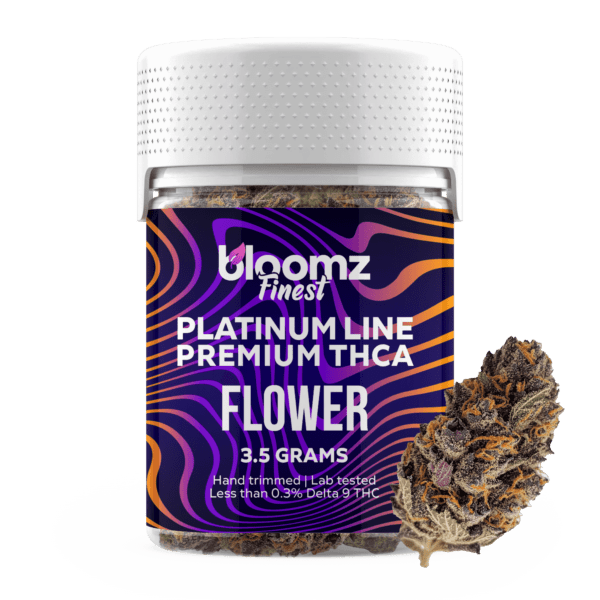
Bloomz‘s responsible practices are therefore not just an obligation to its direct customers — they are a contribution to the category’s overall development toward the higher standards that will make the hemp market more trustworthy, more legible, and more valuable for every consumer who engages with it. A brand that sets a high standard, makes that standard visible, and competes on the basis of meeting it is a brand that is pulling the market in a direction that benefits everyone — consumers, responsible brands, and the long-term development of a category that has significant unrealized potential.
This is the deepest form of corporate responsibility available to a consumer brand: not just doing right by its own customers, but doing right by the market in which it operates, in ways that raise the floor of acceptable practice and create competitive pressure for the brands that have not yet chosen to meet it. Bloomz has chosen this path — not through grand declarations, but through the accumulated evidence of its operational decisions. And in a market still learning what responsibility looks like, that evidence is the most credible statement a brand can make.
TO BUY HEMP PRODUCTS CLICK HERE